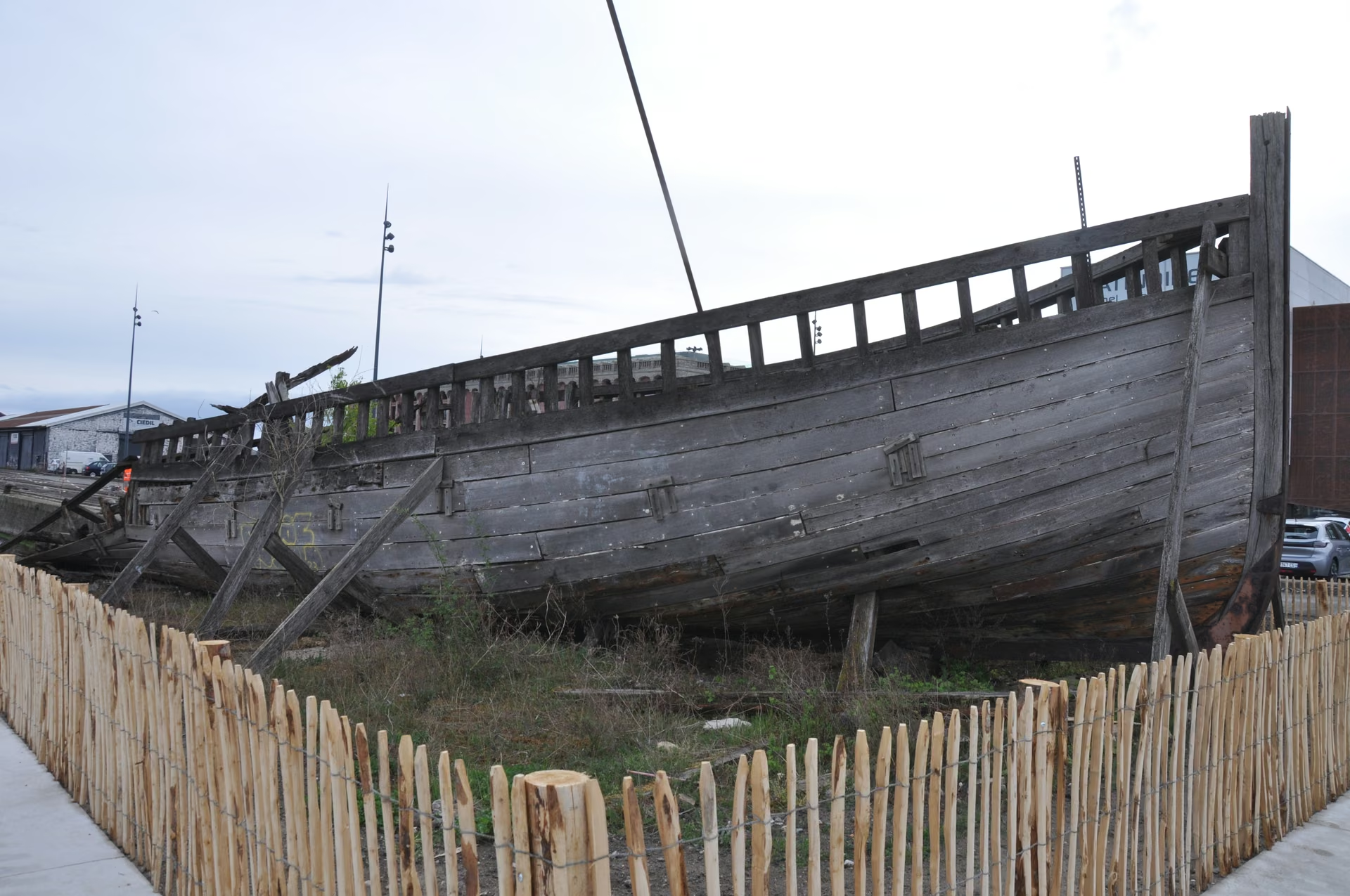
The Sainte-Denise-Louise is a decked dundee, 19.6 metres long, built at the Hillebrand yard in Ostend in 1935 for the Dunkirk fishing skipper Valentin Marteel. She fished inshore for herring between Cap Gris-Nez and the Belgian border, with his brothers, including the engineer Edgard Marteel.
The yard
The Hillebrand yard in Ostend (Belgium) was a shipyard active in the 20th century, known in the region’s maritime history for building wooden fishing vessels and small coastal craft.
Technical details
Type
Decked dundee, 2 masts, 2 gaff sails, jib and topsail.
Material
Oak
Length overall
19.60 m × 5.25 m
Displacement
40 tons
Waterline length
17 m
Speed
11 knots
Victor Marteel, skipper of the Sainte-Denise-Louise.
A participant in Operation Dynamo
Operation Dynamo, the miracle of Dunkirk
At the end of May 1940, the Allied armies were driven back onto the beaches and into the port of Dunkirk. Several hundred thousand soldiers, pounded by the Luftwaffe, were at the mercy of the German army as it tightened its grip. Then history turned. On 26 May, Churchill ordered the evacuation of the British troops. Operation Dynamo had begun, and it quickly became a legend.
On 31 May, the naval ships whose draught kept them off the beaches were joined by an unlikely fleet of merchant vessels, fishing boats, pleasure yachts and Royal National Lifeboat Institution lifeboats — 700 boats gathered in haste. The Sainte-Denise-Louise was one of them.
Operation Dynamo saved nearly 200,000 British soldiers and 140,000 men of the French and Belgian forces. These acts of bravery took place under constant enemy bombing and machine-gun fire.
A heroic Dunkirk dundee at the heart of Operation Dynamo
In 1939, under the command of Victor Marteel, the Sainte-Denise-Louise (DK 818) was used as a minesweeper (pennant AD 394) on the Flemish Banks and in Dunkirk roads. She is typical of the wooden trawlers requisitioned in large numbers by the French Navy from the outbreak of the Second World War to face the threat of underwater mines. Commander Maurice Guierre’s book Marine Dunkerque, written when he headed the navigation police in 1940, records the courage of the Marteel brothers.
In 1940 the boat was in England for repairs when Operation Catapult began, and she was seized by the British. The Sainte-Denise-Louise and her crew soon joined the Free French Forces. The ship took part more than once in clandestine Resistance operations. The Cross of Lorraine was carved into her hull, and she received a collective citation in the Order of the Navy. The dundee returned to Dunkirk in 1945 and joined minesweeping operations. She was awarded the Croix de guerre for distinguished service.
The Sainte-Denise-Louise after the war
After the war, the Sainte-Denise-Louise returned to fishing until 1974, registered first as D 818, then DK 818.
From 1978 to 1985, laid up, she served as a workshop boat for the team restoring the Notre-Dame des Flots, another traditional Gravelines vessel typical of the Nord – Pas-de-Calais. In 1983, the fishing skipper Victor Marteel died.
The crew of the Sainte-Denise-Louise was recognised for its “admirable conduct under bombardment”, skipper Victor Marteel having been slightly wounded by enemy machine-gun fire. Pilot Raoult, a petty officer commanding Dunkirk’s 102nd section of magnetic minesweepers, later said of the Sainte-Denise-Louise: “This is a ship whose crews have the highest sense of sacrifice for their country. These crews stoically did their duty despite the obvious inferiority of their weapons.”
Croix de guerre, awarded for distinguished service.
Official recognition by the Little Ships of Dunkirk
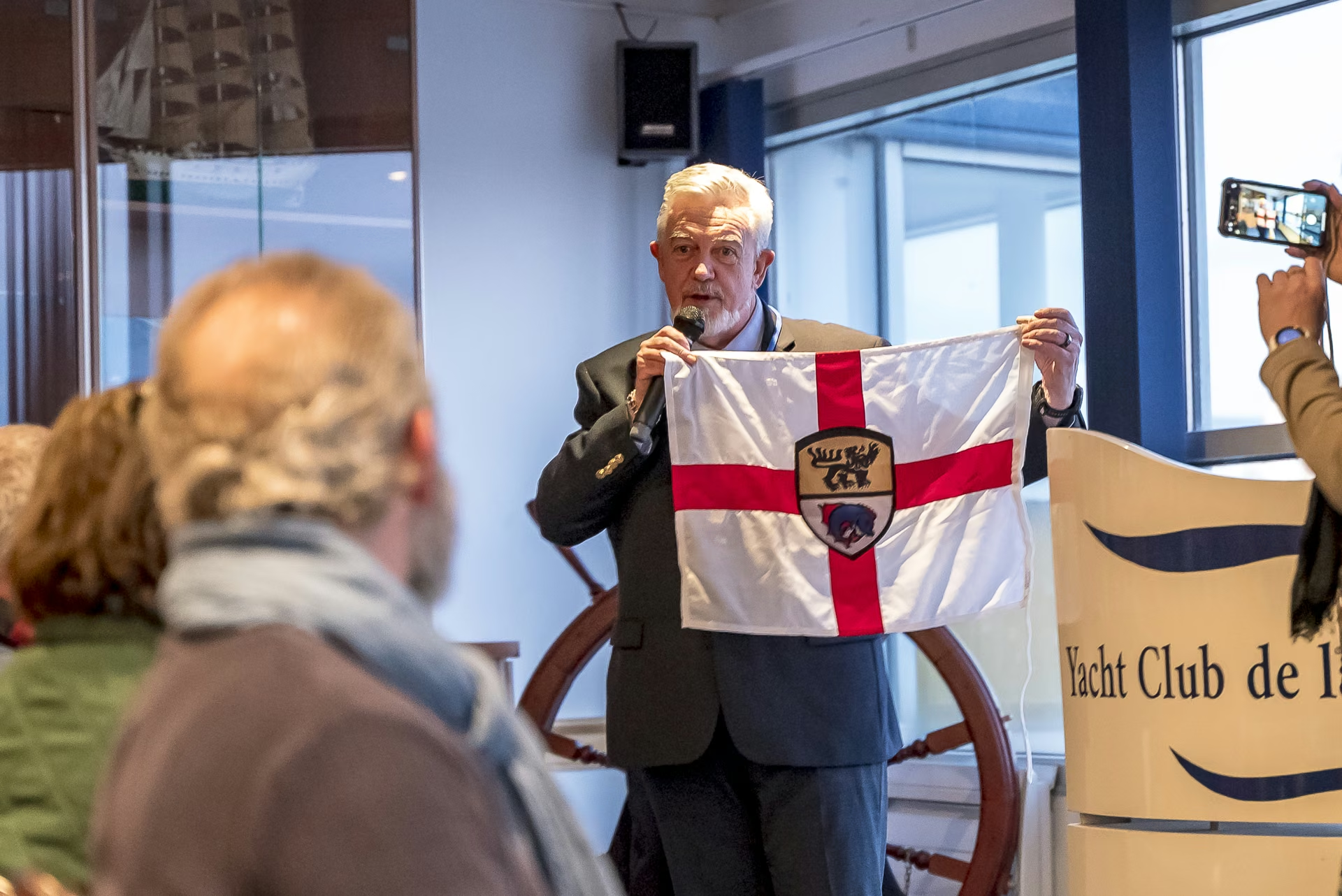
The British Association of Dunkirk Little Ships has officially recognised the project to rebuild the Sainte-Denise-Louise. It gives the project active support and opens access to an international network of enthusiasts and historians, and then to major commemorative events. The support of the Little Ships of Dunkirk, and the Franco-British nature of the project, give the Sainte-Denise-Louise an international reach.
Kevin Finn, commodore of the Little Ships of Dunkirk.
A historic monument
Since 21 May 1992, the Sainte-Denise-Louise has been listed as a historic monument, reference PM 59001581. Protection is limited to the hull. The French state (then the Ministry of National Education and Culture) took this decision because preserving the vessel is in the public interest for history and for maritime technique.
The wreck of the Sainte-Denise-Louise can be seen on Mole 2, at Freycinet quay 5.
The model of the Sainte-Denise-Louise, and the space devoted to her, can also be seen at the Dunkirk 1940 Museum – Operation Dynamo. www.dynamo-dunkerque.com
This site uses cookies required for it to work. The Facebook feed is loaded only with your consent. Google Analytics may set audience-measurement cookies.